Enhancing CVE Management with IBM Concert: Smarter Application Management Through AI Insights (A Cencora/Amerisource Bergen perspective)
In the digital era, security vulnerabilities remain a constant threat. Managing these vulnerabilities efficiently requires a system capable of processing vast amounts of data and providing actionable insights. This is where IBM Concertcomes in. By leveraging AI insights, Concert simplifies and optimizes application management across data silos, ensuring IT teams can stay ahead of potential risks, including…

Adapt to Dynamic Pricing with Event-Driven Solutions from IBM: Empowering Retail Giants like Walmart and Costco
In a rapidly evolving retail landscape, the ability to adapt to dynamic pricing can be the difference between staying competitive and falling behind. According to the IBM Institute for Business Value’s research brief on “5 trends for 2023,” rapid response has become the new baseline, with organizations needing to reduce the time from insight to…

Unlocking Cloud Potential: A Success Story of API Management with IBM APIC on AWS EKS
The Client The client is a leading provider of technology solutions critical to the administration and operations of health and human services programs. They specialize in creating and delivering software and systems that support a wide array of services in the healthcare sector, including patient care management, health data analytics, regulatory compliance, and more. Their…
Datasets for Data Science.
Open datasets and sources In this data-driven world, some datasets are freely available for anyone to access, use, modify, and share. These are called open datasets.Open datasets include a public license and are very useful for your journey as a Data Scientist. Some of the most informative open dataset sources are listed below. Government Data: Financial…
AIOPs and Kubernetes: Charting the Future of Automated IT Operations
In the realm of IT operations, the integration of Artificial Intelligence for IT Operations (AIOPs) and Kubernetes is not just an emerging trend, but a transformative shift that is redefining how businesses manage and deploy applications. As we delve into this integration, it’s crucial to understand the current landscape and explore the art of the…
Using Spring Boot to create an AI application
Creating an AI application with Spring Boot involves integrating machine learning or AI capabilities into a Spring Boot application. For the sake of this example, I’ll show you a simple Spring Boot application that uses a pre-trained machine learning model to make predictions. For simplicity, we’ll use a popular Java machine-learning library called Deeplearning4j. Please…
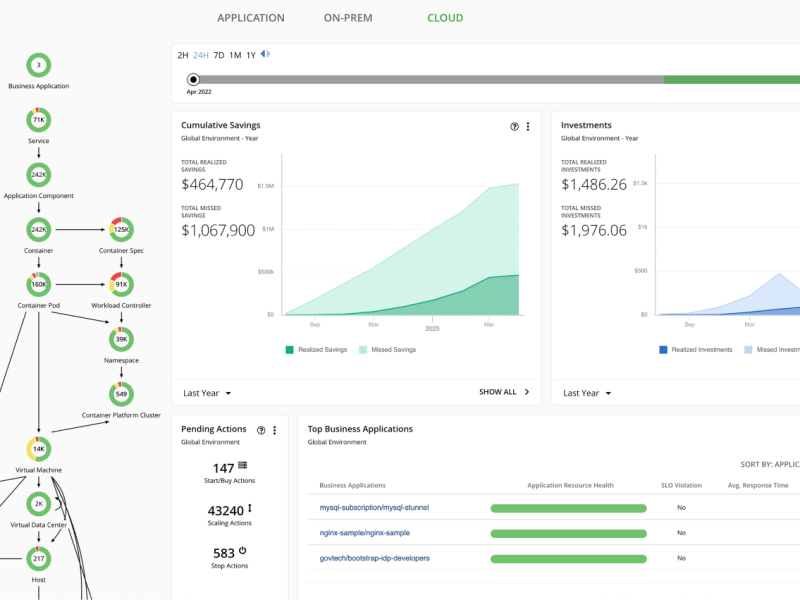
Orchestrating Efficiency: Turbonomic, Cloud FinOps, AI Cost Optimization, and Large Language Models
In the dynamic intersection of cloud computing, artificial intelligence (AI), and the advent of Large Language Models (LLMs), organizations are increasingly challenged with maximizing efficiency while harnessing the power of transformative technologies. This article explores the synergies between Turbonomic, Cloud FinOps, AI cost optimization, and the nuanced world of Large Language Models, delving into a…

IBM Telum Processor: Revolutionizing AI for Real-Time Enterprise Transactions
In the era of the digital economy, the value of data is unparalleled, offering immense opportunities for extracting insights. However, the challenge lies in running deep learning models on high-volume transactional data without compromising on latency, variability, or security. IBM is poised to address this challenge head-on with its latest innovation in system and microprocessor…
Unveiling the Power of Large Language Models: Transforming the Landscape of Natural Language Processing
In recent years, the development of large language models has reshaped the field of Natural Language Processing (NLP), pushing the boundaries of what computers can achieve in understanding and generating human-like text. These models, trained on massive datasets with millions or even billions of parameters, have become pivotal in various applications, revolutionizing the way we…

Analyzing CRISPR data in Tableau
Analyzing CRISPR (Clustered Regularly Interspaced Short Palindromic Repeats) data in Tableau involves visualizing and exploring relevant information extracted from your CRISPR experiments. The specific steps can vary based on your dataset, but here’s a general guide on how you might approach CRISPR analysis with Tableau: 1. Data Preparation: 2. Explore the Data: 3. Custom Calculations:…
Something went wrong. Please refresh the page and/or try again.
Follow My Blog
Get new content delivered directly to your inbox.
 AI for the Enterprise