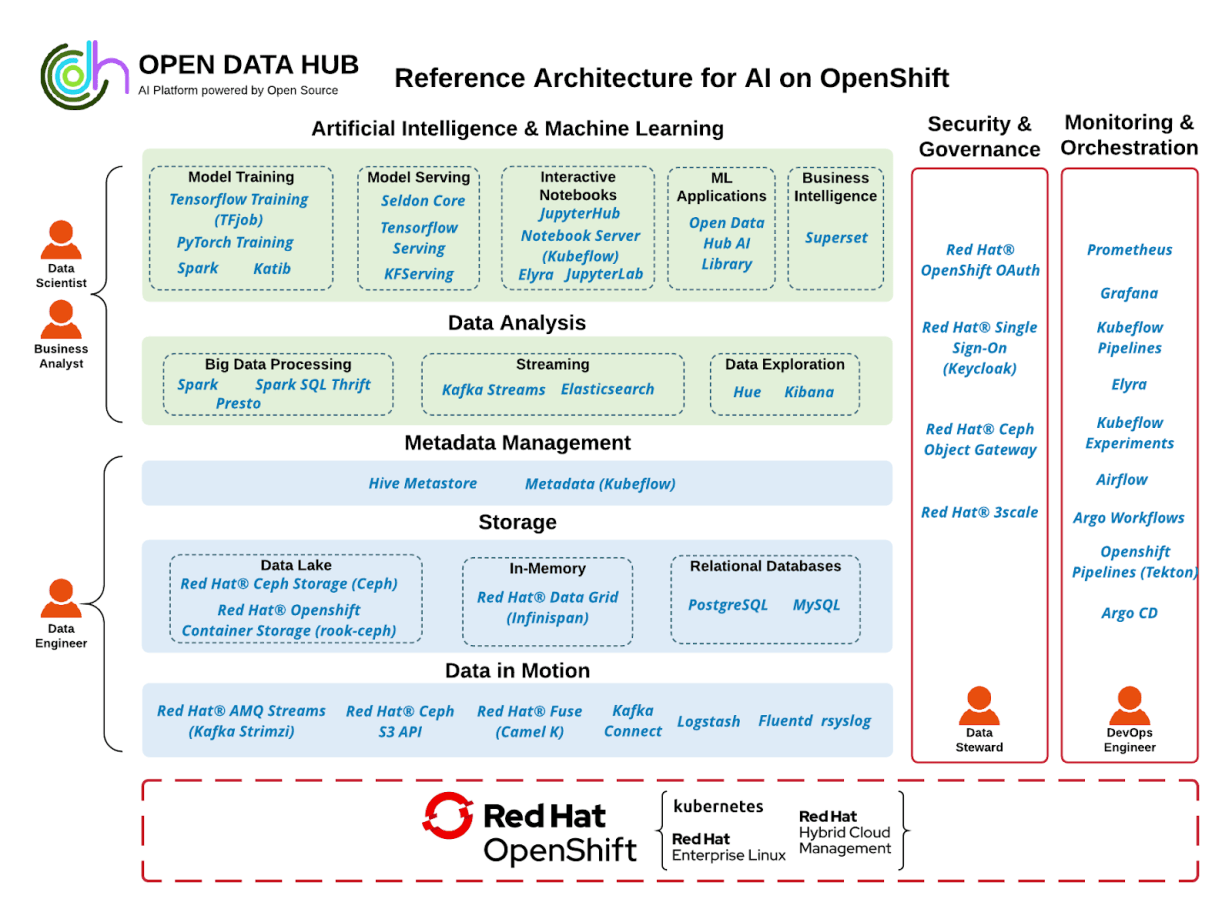
Introduction:
In the dynamic landscape of modern technology, the convergence of containerization and artificial intelligence (AI) has become a transformative force. OpenShift, an innovative container orchestration platform developed by Red Hat, plays a pivotal role in facilitating the seamless integration of AI applications within scalable and efficient container environments. This article explores the intersection of OpenShift and AI, examining how this powerful combination is reshaping the way organizations deploy, manage, and scale intelligent applications.
I. Understanding OpenShift:
OpenShift, built on Kubernetes, is a robust container orchestration platform designed to simplify the deployment, scaling, and management of containerized applications. It provides a comprehensive ecosystem for container orchestration, offering tools for application development, deployment, and operation. OpenShift’s key features include automation, scalability, and portability, making it an ideal platform for deploying AI workloads.
II. The Role of Containers in AI:
Containers have revolutionized software development by encapsulating applications and their dependencies into isolated units, ensuring consistency across different environments. This paradigm shift is particularly advantageous for AI applications, where dependencies on specific libraries, frameworks, and configurations are crucial. Containers provide a lightweight and portable solution, allowing AI models to be packaged and deployed consistently across diverse infrastructure.
III. Benefits of OpenShift for AI:
- Portability and Consistency: OpenShift’s container-centric approach ensures that AI applications are packaged with all their dependencies, providing portability across various environments. This consistency simplifies the deployment process and mitigates compatibility issues.
- Scalability: OpenShift’s scalability features enable organizations to effortlessly scale AI workloads as demand fluctuates. The platform’s automated scaling capabilities ensure optimal resource utilization, maximizing efficiency in running resource-intensive AI applications.
- Resource Efficiency: By efficiently managing resources, OpenShift helps organizations optimize infrastructure costs associated with AI workloads. It allocates resources dynamically, ensuring that AI applications receive the necessary compute power while minimizing waste.
- DevOps Integration: OpenShift promotes a DevOps culture by streamlining collaboration between development and operations teams. This integration accelerates the AI application development lifecycle, fostering agility and innovation.
IV. Use Cases and Applications:
- Machine Learning Model Deployment: OpenShift facilitates the deployment of machine learning models by providing a consistent environment across development, testing, and production stages. This ensures that AI models behave consistently in diverse scenarios.
- Real-time Analytics: AI applications requiring real-time data processing and analytics benefit from OpenShift’s ability to scale horizontally. This is crucial for applications like fraud detection, recommendation systems, and predictive maintenance.
- Natural Language Processing (NLP) and Language Translation: AI applications in NLP and language translation demand substantial computational resources. OpenShift’s scalability and resource management make it an ideal platform for deploying and managing such AI workloads effectively.
V. Challenges and Considerations:
While the integration of OpenShift and AI presents numerous advantages, organizations must address certain challenges, including:
- Data Management: Efficient data storage and management are critical for AI applications. OpenShift users must implement robust strategies for handling large datasets, ensuring accessibility and security.
- Integration Complexity: Integrating AI applications into the OpenShift environment may require careful consideration of application dependencies, configurations, and compatibility issues.
- Skill Set Requirements: Adopting OpenShift for AI necessitates a skilled workforce proficient in both containerization technologies and AI. Organizations may need to invest in training to bridge this skills gap.
VI. Future Trends:
The collaboration between OpenShift and AI is poised to evolve with ongoing advancements. Key trends to watch include:
- Edge Computing: As edge computing gains prominence, the combination of OpenShift and AI is likely to play a pivotal role in deploying intelligent applications closer to the data source, reducing latency and enhancing real-time decision-making.
- AI Orchestration: Enhanced tools for orchestrating and managing AI workflows within OpenShift environments will simplify the deployment and scaling of complex AI pipelines.
- Hybrid and Multi-Cloud Deployments: OpenShift’s compatibility with hybrid and multi-cloud environments positions it as a versatile solution for organizations seeking to leverage AI across diverse infrastructure setups.
Conclusion:
OpenShift’s integration with AI represents a significant leap forward in the realm of containerized intelligence. The synergies between containerization and artificial intelligence empower organizations to build, deploy, and scale intelligent applications with unprecedented efficiency. As technology continues to advance, the collaboration between OpenShift and AI is poised to drive innovation, enabling organizations to harness the full potential of intelligent, containerized applications.
 AI for the Enterprise
Leave a comment